

A deviated septum on examination or a scan does not automatically require surgery. Treatment is considered when the structural narrowing matches the symptoms and simpler measures cannot provide adequate relief.
Is the Blockage Structural or Reversible?
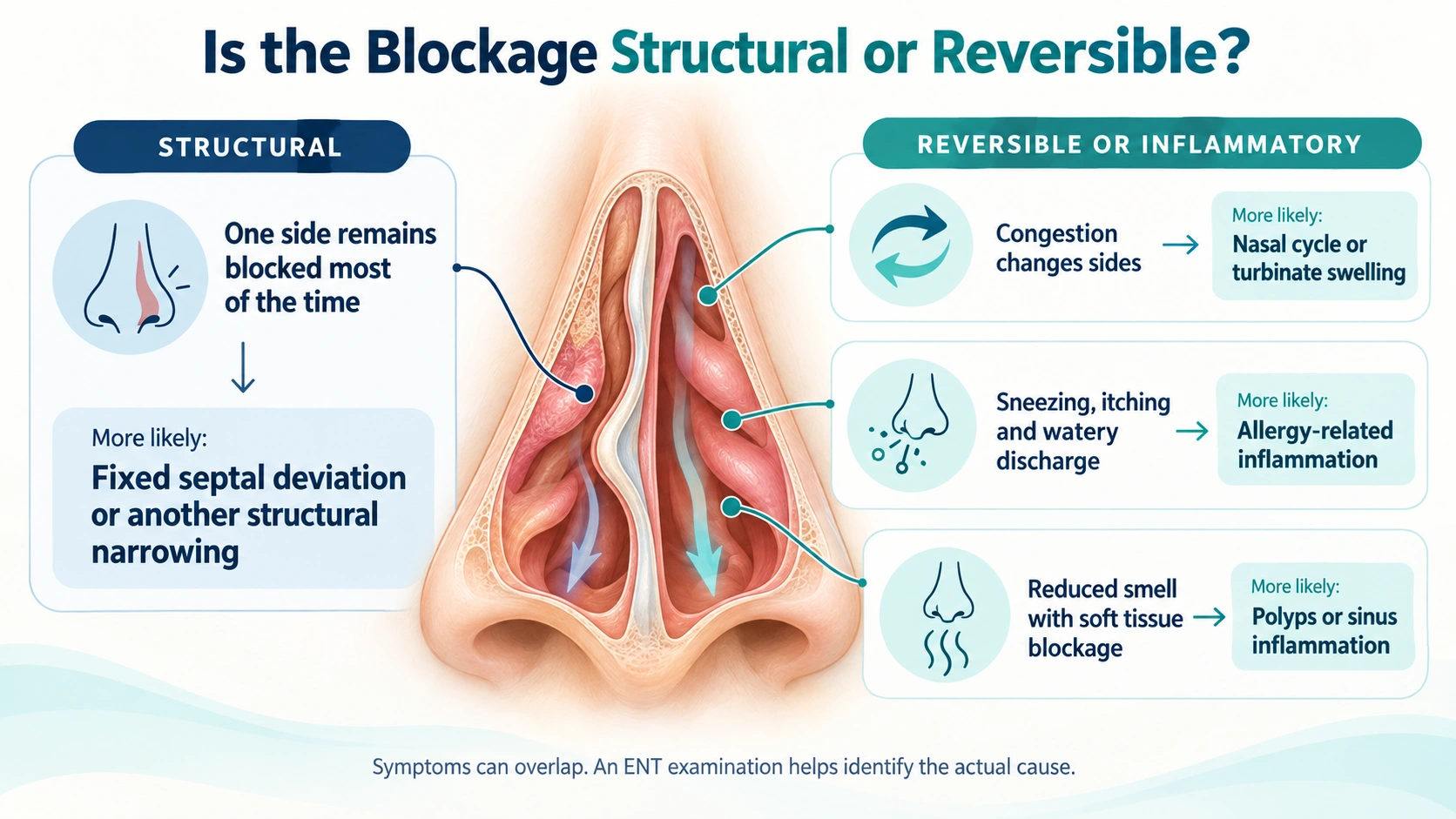
Many patients have more than one cause, which is why examination is more useful than judging symptoms alone.
Symptoms That May Suggest a Deviated Septum
A septal deviation may be present from birth, develop as the face grows or follow nasal injury. Symptoms can include:
- Long-standing blockage on one or both sides
- Difficulty breathing through the nose during exercise
- Mouth breathing, particularly during sleep
- Recurrent dryness, crusting or nosebleeds
- Disturbed sleep or worsening snoring
- Facial pressure associated with poor nasal airflow
- Repeated sinus symptoms in selected patients
Allergy and enlarged turbinates can create similar symptoms. Nasal polyps, sinus disease and nasal valve narrowing are other possible causes, so correct diagnosis is essential before planning DNS surgery.
How Is Nasal Blockage Evaluated?
The consultation includes a history of when the obstruction started, whether it changes sides and whether allergy, injury or sleep symptoms are present. Anterior examination and diagnostic nasal endoscopy can show the septum, turbinates, polyps and deeper nasal passages. CT imaging is not required for every isolated deviation but may be advised when chronic sinusitis or another condition is suspected.
Initial treatment may include saline rinses, allergy management or prescribed nasal sprays when swelling contributes to blockage. Medicines can reduce inflamed tissue but cannot physically straighten a markedly bent septum.
Treating the septum alone will not correct uncontrolled allergy or nasal valve collapse, so coexisting causes must be identified.
What Happens During Septoplasty?
Septoplasty is performed through the nostrils, generally under anaesthesia. The surgeon lifts the lining covering the septum and carefully reshapes or removes only the obstructing portions of cartilage and bone. The aim is functional improvement while retaining enough support for the nose.
Incisions are usually inside the nose, so an external scar is not expected from a routine septoplasty. Splints or soft packing may be used in selected cases. If enlarged turbinates also contribute to obstruction, turbinoplasty or turbinate reduction may be discussed as an additional procedure.
Septoplasty is different from cosmetic rhinoplasty. It primarily addresses internal obstruction and does not routinely change the external appearance. Patients seeking cosmetic alteration need a separate assessment and plan.
Septoplasty Recovery Timeline
Early days: Swelling, crusting, splints and mild blood-stained discharge can make the nose feel temporarily blocked.
Initial healing: Use saline care and prescribed treatment; avoid forceful nose blowing, bending and heavy lifting.
Return to activity: Resume strenuous exercise only according to the individual postoperative plan.
Breathing result: Judge improvement after internal swelling settles, not immediately after surgery.
Benefits and Limitations
- Improved nasal airflow when the septum is the main obstruction
- Less mouth breathing and greater comfort during sleep or exercise
- Better access for other indicated nasal procedures
- No guaranteed cure for allergy, every headache, snoring or sleep apnoea
Possible Risks
- Bleeding, infection, crusting or persistent blockage
- Septal perforation or adhesions inside the nose
- Temporary numbness or altered smell
- Uncommon change in nasal support or need for revision
Consult for Deviated Septum Treatment in Indore
Persistent nasal blockage deserves more than repeated decongestant use, which can itself worsen congestion when overused. Patients considering septoplasty in Indore can consult Dr. Abhishek Malviya for nasal examination, endoscopic evaluation and a personalised discussion about medical treatment, septum correction and turbinate care.
FAQ
What is septoplasty?
Septoplasty is surgery to straighten obstructing parts of the nasal septum and improve airflow through the nose.
How do I know if I have a deviated septum?
An ENT examination, sometimes supported by nasal endoscopy, determines whether septal deviation is present and causing the symptoms.
Can medicines fix a deviated septum?
Medicines can reduce allergy or swelling around it, but they cannot straighten cartilage or bone.
Will septoplasty change my nose shape?
Routine septoplasty is functional surgery performed inside the nose and generally does not aim to change external appearance.
Is septoplasty the same as rhinoplasty?
No. Septoplasty corrects the internal septum; rhinoplasty changes the external shape. They may be combined in selected cases.
How long does nasal blockage last after surgery?
Temporary blockage from swelling and crusting is expected. Improvement develops gradually over the following weeks.
Can septoplasty stop snoring?
It may help when nasal obstruction contributes to snoring, but snoring and sleep apnoea can have several other causes.
When can I exercise again?
Light activity resumes before strenuous exercise. Follow the surgeon’s timeline to reduce the risk of bleeding.
Can septal deviation return?
Most corrections are durable, but healing, scar tissue, trauma or complex cartilage forces can cause persistent or recurrent deviation.
Who performs septoplasty in Indore?
Dr. Abhishek Malviya evaluates nasal obstruction and provides individualised advice about septoplasty surgery in Indore.
This information is educational. An examination is needed to decide which treatment is appropriate. Benefits, risks and recovery vary between patients.