

Myringotomy may be performed alone in selected situations or followed by insertion of a ventilation tube. The distinction matters: the incision drains fluid now, while a grommet keeps the middle ear ventilated for longer.
Myringotomy at a Glance
| Question | Patient-friendly answer |
|---|---|
| What is treated? | Fluid or pressure behind the eardrum |
| What is done? | A tiny opening is made and fluid is removed |
| Is a tube always used? | No; it depends on the reason and expected duration of ventilation |
| Is it only for children? | No; adults may also need the procedure |
Signs in Children and Adults
The Eustachian tube normally ventilates the middle ear and drains fluid towards the back of the nose. It may not work effectively during or after a cold, allergy, enlarged adenoids, infection or pressure change. Children are more prone because their Eustachian tubes are shorter and more horizontal.
Possible symptoms include:
- Muffled or reduced hearing
- Ear pressure, popping or blocked-ear sensation
- Recurrent middle-ear infections
- Delayed response when a child is called
- Increased television volume or difficulty hearing in class
- Speech or language concerns associated with persistent hearing reduction
- Balance disturbance or irritability in younger children
Children may seem inattentive, increase the television volume or struggle in class. Adults more often describe muffled hearing, pressure, popping or one blocked ear. Middle-ear fluid does not always cause pain or fever, so it may remain unnoticed until hearing is tested.
When Is Myringotomy Considered?
Short-term fluid after an infection often resolves without surgery. The ENT specialist considers how long the fluid has been present, whether it affects one or both ears, the degree of hearing loss, frequency of infections and impact on development or daily life. Otoscopy, tympanometry and age-appropriate hearing tests help confirm the diagnosis.
Myringotomy may be advised when fluid persists despite observation, when infections recur frequently or when rapid drainage is clinically necessary. In adults, one-sided persistent effusion may require additional nasal and throat evaluation to identify an underlying cause.
What Happens During the Procedure?
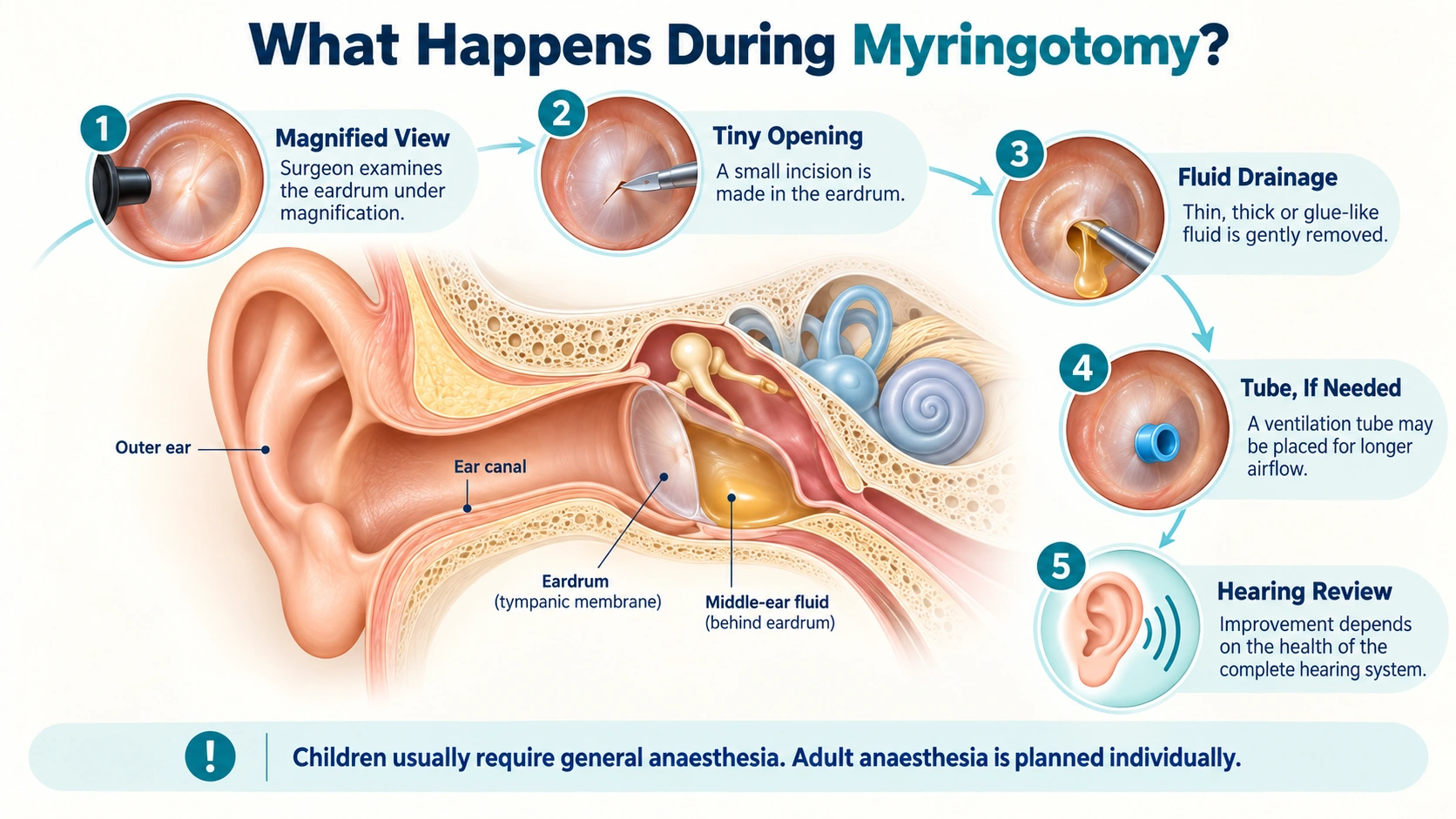
Care After Myringotomy
Myringotomy is often performed as a day-care procedure. Mild discomfort or a small amount of discharge can occur initially. Ear drops may be prescribed, particularly when a tube is inserted or infection is present. Patients should follow instructions about keeping the ear dry, bathing and swimming because advice can differ based on the procedure and tube type.
Hearing may improve soon after drainage, although some patients need time for swelling to settle. Follow-up allows the ENT specialist to inspect the eardrum and confirm that the middle ear remains well ventilated. Children with previous hearing or speech concerns may require repeat audiology and developmental follow-up.
Possible Benefits
- Drains persistent middle-ear fluid
- Relieves pressure and blocked-ear sensation
- May improve conductive hearing caused by fluid
- Can reduce the burden of selected recurrent infections
Possible Complications
- Temporary discharge, infection or minor bleeding
- Scarring of the eardrum
- Return of fluid if Eustachian tube dysfunction continues
- Tube blockage or early extrusion when a grommet is inserted
- A small residual perforation after a tube, which is uncommon
Myringotomy Consultation in Indore
A child who seems inattentive may actually be struggling to hear through middle-ear fluid. Similarly, persistent blocked hearing in an adult deserves examination rather than repeated self-medication. Patients searching for glue-ear treatment or myringotomy surgery in Indore can consult Dr. Abhishek Malviya, ENT Surgeon in Indore, for microscopic ear examination, hearing assessment and an age-appropriate care plan.
FAQ
What is myringotomy?
Myringotomy is a small incision in the eardrum made to drain middle-ear fluid and relieve pressure.
Is myringotomy only for children?
No. It is common in children but may also be recommended for adults with persistent fluid, infection or pressure problems.
Is a tube always inserted?
Not always. Some cases need drainage alone, while others benefit from a ventilation tube to keep the middle ear aerated.
How is glue ear diagnosed?
Diagnosis usually involves ear examination, tympanometry and hearing assessment. Symptoms alone may not reveal the extent of hearing reduction.
Does myringotomy improve hearing?
It often improves conductive hearing caused by trapped fluid. Other hearing problems may require separate evaluation.
Is general anaesthesia required?
Children generally undergo the procedure under general anaesthesia. The plan for adults depends on the clinical circumstances.
Can fluid return after myringotomy?
Yes, particularly if Eustachian tube dysfunction continues. A ventilation tube may reduce recurrence in selected patients.
Can my child swim after the procedure?
Swimming advice depends on whether a tube was inserted and the type of water exposure. Follow the treating surgeon’s instructions.
When should hearing be retested?
The ENT specialist schedules repeat testing based on age, initial hearing level and recovery after drainage.
Where is myringotomy available in Indore?
Dr. Abhishek Malviya evaluates persistent middle-ear fluid and offers appropriate myringotomy planning in Indore.
This information is educational. An examination is needed to decide which treatment is appropriate. Benefits, risks and recovery vary between patients.