
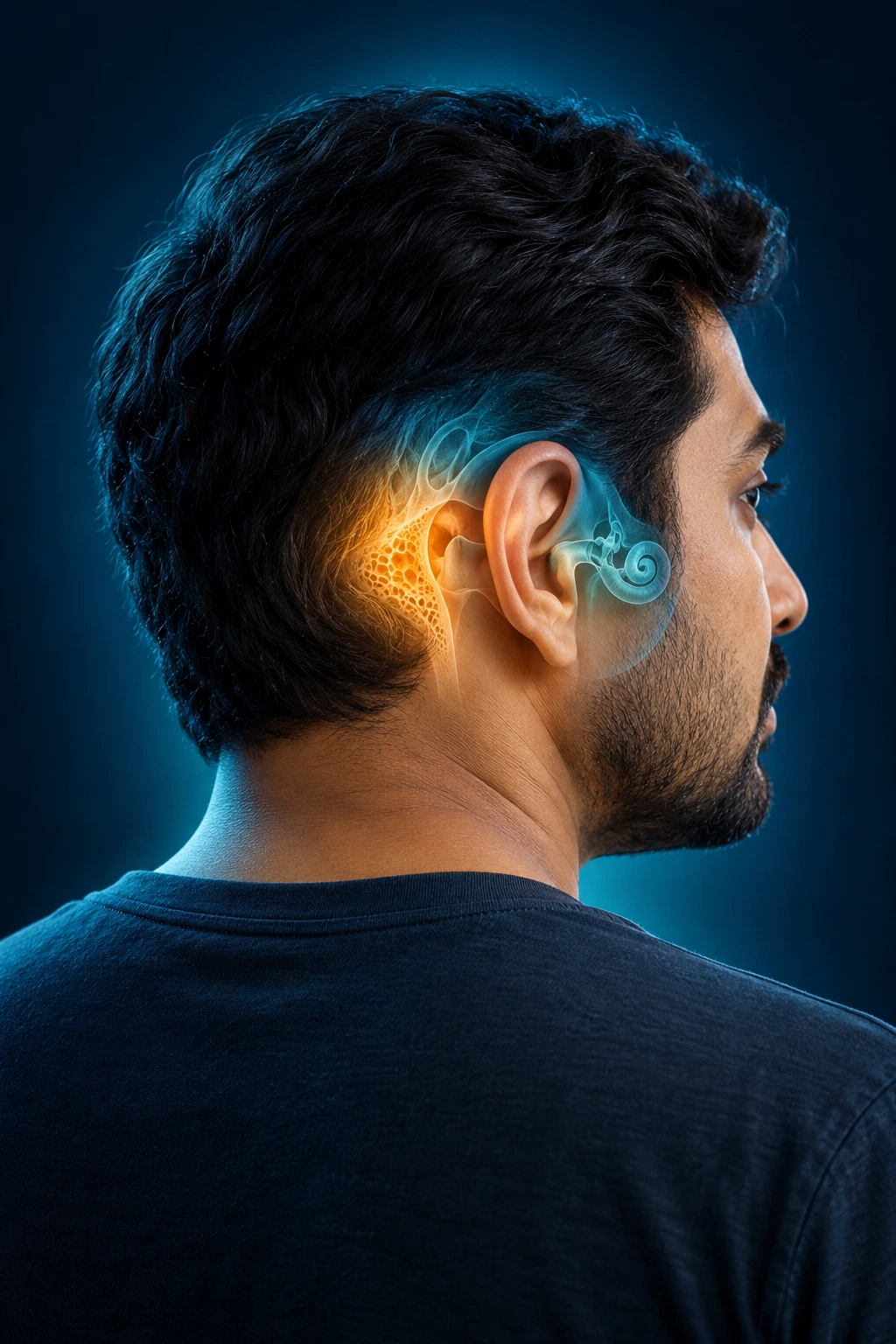
The operation is intended to clear mastoid disease while preserving the ear canal and important hearing structures whenever the condition allows.
What Is Cortical Mastoidectomy?
Cortical mastoidectomy, also known as simple mastoidectomy, is an operation in which infected or diseased mastoid air cells are opened and removed. The ear canal wall is retained, distinguishing it from more extensive forms of mastoid surgery.
The procedure may be performed alone or together with eardrum repair when both the mastoid and eardrum require treatment.
When Is Cortical Mastoidectomy Recommended?
An ENT surgeon may recommend the procedure for:
Persistent ear discharge: Discharge continues or repeatedly returns despite appropriate treatment.
Chronic middle-ear infection: Long-standing infection has affected the mastoid air-cell system.
Acute mastoiditis: Pain, fever or swelling persists despite medical management.
Eardrum perforation with mastoid disease: The eardrum and mastoid require treatment during the same operation.
Abnormal examination or CT findings: Imaging or ear examination demonstrates disease requiring surgical clearance.
Symptoms That May Indicate Mastoid Disease
Recurring ear discharge: Fluid may be persistent, foul-smelling or return after treatment ends.
Reduced hearing: Sound may feel blocked or less clear in the affected ear.
Pain behind the ear: Tenderness may develop over the mastoid bone.
Redness or swelling: The area behind the ear may become inflamed or push the ear outward.
Fever or headache: These may accompany an active or spreading infection.
Dizziness or facial weakness: These require prompt assessment because nearby structures may be involved.
Types of Mastoidectomy
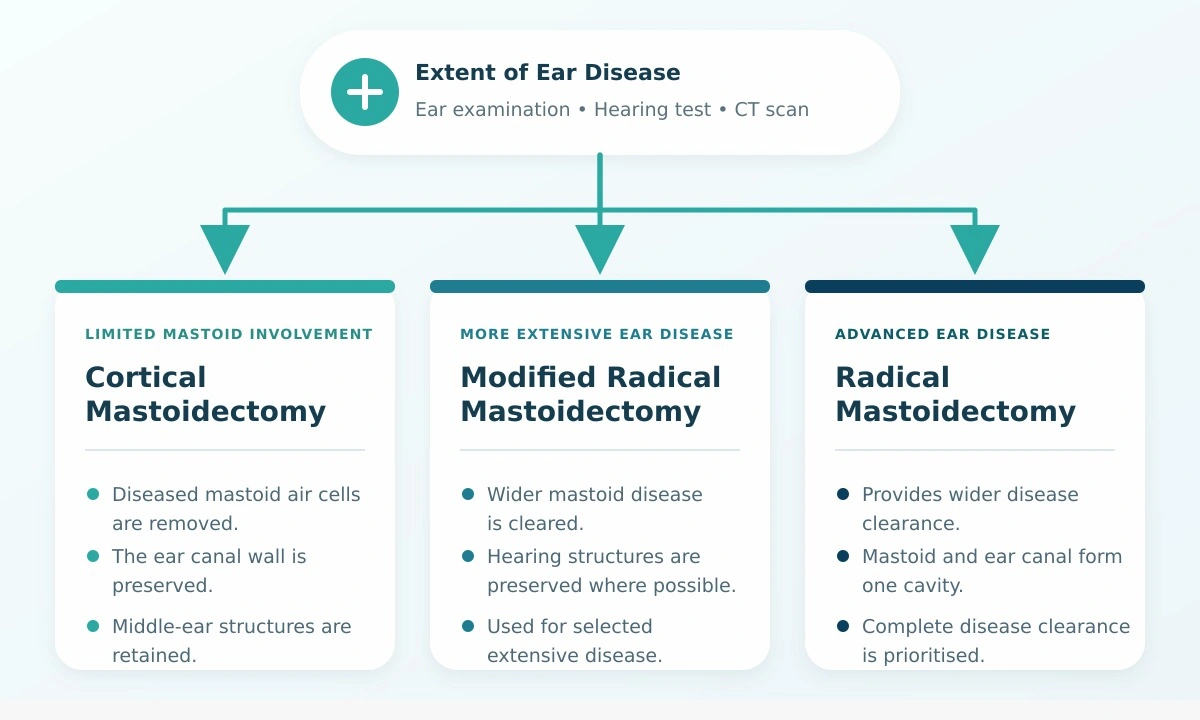
The appropriate operation depends on how far the disease has spread and which ear structures are involved. The accompanying flowchart explains the difference between cortical, modified radical and radical mastoidectomy.
Tests Before Mastoidectomy Surgery
Planning may include microscopic or endoscopic ear examination, pure-tone audiometry and, when appropriate, tympanometry. A CT scan of the temporal bone can show mastoid anatomy and the extent of disease. Routine investigations and anaesthesia assessment are completed before surgery.
How Is Cortical Mastoidectomy Performed?
Anaesthesia is administered for patient comfort and safety.
An incision is made behind the affected ear.
The mastoid bone is exposed using a controlled surgical approach.
Infected or diseased air cells are carefully removed.
The facial nerve, balance system, hearing mechanism and covering of the brain are protected.
The area is cleaned before the incision is closed and dressed.
If required, eardrum or hearing-bone repair may be undertaken during the same operation.
Benefits of Cortical Mastoidectomy
Removal of persistent infection: Diseased mastoid air cells can be cleared directly.
Reduced ear discharge: Surgery may decrease repeated episodes associated with deeper infection.
Protection from further damage: Timely clearance can limit progression to surrounding structures.
Improved conditions for healing: A healthier mastoid may support eardrum repair.
Possible hearing benefit: Hearing may improve when associated conductive problems can be corrected.
Risks and Possible Complications
Bleeding or infection: These are recognised risks associated with surgical procedures.
Temporary dizziness: Balance disturbance may occur during the early postoperative period.
Taste alteration: The taste nerve running through the middle ear may be affected.
Tinnitus or hearing change: Hearing may improve, remain unchanged or occasionally reduce.
Persistent or recurrent discharge: Further treatment or revision surgery may sometimes be necessary.
Injury to nearby structures: Facial nerve injury or complications involving the balance system or brain covering are uncommon but important risks.
Essential Care After Mastoid Surgery
Keep the dressing, incision and operated ear dry.
Take prescribed medicines exactly as directed.
Avoid forceful nose blowing, swimming, heavy lifting and strenuous exercise.
Return for scheduled wound, packing and hearing reviews.
Resume work, travel and exercise only after medical clearance.
Cortical Mastoidectomy Cost in Indore
Cost depends on the hospital, investigations, anaesthesia, extent of mastoid disease and whether another ear procedure is required. An estimate is provided after examination and surgical planning.
Consultation for Mastoidectomy Surgery in Indore
Dr. Abhishek Malviya evaluates persistent ear discharge, chronic ear infection and suspected mastoid disease through clinical examination, hearing assessment and appropriate imaging. Treatment is planned according to the extent of disease, with surgery recommended only when clinically indicated.
FAQ
Is cortical mastoidectomy a major surgery?
It is a specialised ear operation performed close to important hearing, balance and nerve structures. Its complexity depends on the extent of disease and whether an additional ear procedure is required.
Is cortical mastoidectomy painful?
The operation is performed under anaesthesia. Postoperative discomfort is generally managed with pain-relieving medicines prescribed by the treating surgeon.
How long does cortical mastoidectomy take?
The duration varies according to mastoid anatomy, extent of infection and whether eardrum or hearing-bone repair is performed simultaneously.
How long is the hospital stay after mastoidectomy?
Hospital stay depends on the procedure, medical condition and early recovery. The treating team determines when discharge is appropriate.
Will cortical mastoidectomy leave a scar?
The incision is usually placed behind the ear. The scar commonly becomes less noticeable as healing progresses, although scarring varies between patients.
Does cortical mastoidectomy improve hearing?
Hearing may improve when infection is cleared and a correctable conductive problem is treated. Improvement cannot be guaranteed because the result depends on the complete hearing mechanism.
Can mastoid infection return after surgery?
Persistent or recurrent disease is possible. Regular postoperative examination helps identify problems early and determine whether further care is required.
When can I wash my hair after mastoid surgery?
The incision and ear should remain dry until the surgeon permits water exposure. Individual instructions are provided before discharge.
When can I swim after mastoidectomy?
Swimming should be avoided until adequate healing has been confirmed. The restriction period varies according to the procedure and recovery.
Where can I consult for cortical mastoidectomy in Indore?
Patients can consult an expert ENT surgeon in Indore for ear examination, hearing tests and imaging to determine whether cortical mastoidectomy is appropriate.
This information is educational. An examination is needed to decide which treatment is appropriate. Benefits, risks and recovery vary between patients.