
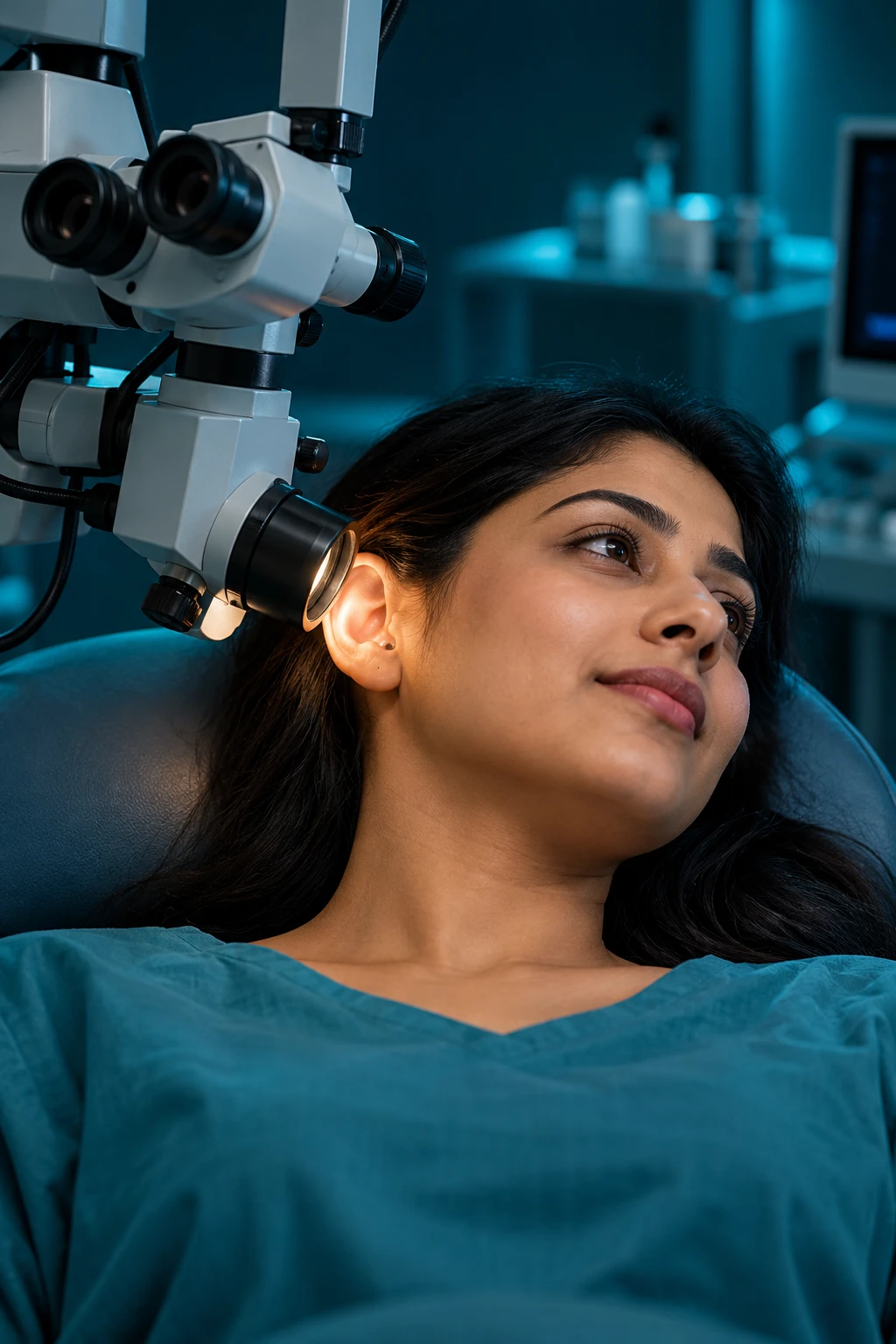
EUM is not automatically required for every ear complaint. It is selected when magnification can improve diagnostic accuracy or allow controlled cleaning and treatment.
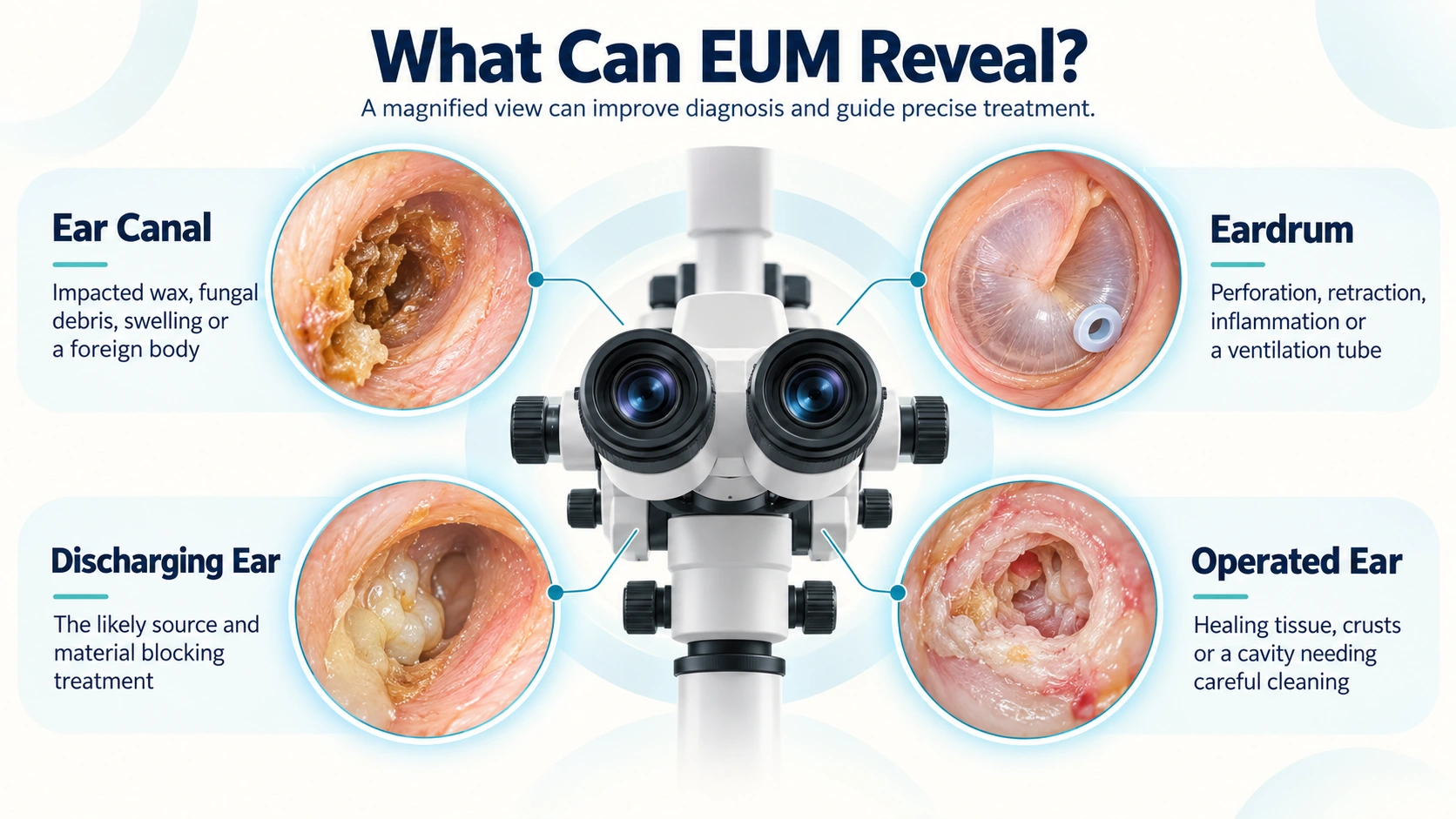
What Can EUM Reveal?
When May Microscopic Ear Examination Be Recommended?
An EUM may be useful when symptoms continue despite routine care or when the ear canal is blocked by wax, discharge or fungal debris. It can support assessment of:
- Persistent or recurrent ear discharge
- Impacted earwax that obscures the eardrum
- Fungal infection of the ear canal
- Suspected eardrum perforation or retraction
- Cholesteatoma or abnormal skin debris
- A foreign body in the ear canal
- Ear pain with an unclear cause
- Postoperative ear cavities or healing after ear surgery
It also supports suction cleaning, sample collection or precise application of treatment.
What Happens During EUM?
The patient sits or lies in a stable position while the ENT specialist uses an operating microscope to inspect the ear. A sterile ear speculum may gently straighten and open the canal. Unlike an instrument placed deep inside the ear, the microscope remains outside and provides magnification from a comfortable working distance.
If wax, pus or fungal material blocks the view, microsuction or fine instruments may be used to remove it carefully. The patient should remain still because the ear canal is narrow and delicate. Most outpatient examinations are completed without general anaesthesia, although children or patients needing an extensive procedure may require a different approach.
Is Microsuction the Same as EUM?
No. EUM describes examinations using a microscope. Microsuction is one technique that may be performed under that magnified view. An examination may involve observation only, while microsuction may be used to clear wax or discharge. Similarly, ear cleaning is not always advisable; inflamed skin, a perforated eardrum or recent surgery can change which method is safest.
Cotton buds, pins, matchsticks and unprescribed ear drops can push material deeper, injure the canal or worsen infection. Professional examination is particularly important if there is pain, previous ear surgery, a known perforation or sudden change in hearing.
Preparing for the Examination
Usually, no fasting or major preparation is needed for an outpatient EUM. Tell the doctor about ear surgery, grommets, hearing aids, blood-thinning medicines and any drops already used. Avoid attempting aggressive wax removal before the appointment.
The ear may feel clearer immediately after obstructing material is removed. If the canal is very inflamed, it can remain tender temporarily. The doctor may prescribe ear drops, arrange hearing tests, request imaging or plan follow-up depending on what is found.
If infection is suspected, cleaning under magnification can improve the effectiveness of prescribed drops by removing material that blocks contact with the skin. A swab may occasionally be collected when discharge is persistent, unusual or has not responded to previous treatment.
Benefits of EUM
Provides a magnified and well-lit view of the ear canal and eardrum.
Helps identify small abnormalities that may not be clearly visible during a routine ear examination.
Enables precise removal of wax, discharge, fungal debris or crusts when required.
Supports targeted treatment and helps the doctor explain the diagnosis more clearly.
Limitations of EUM
Does not replace audiometry for measuring hearing levels.
Does not replace tympanometry for assessing middle-ear function.
Imaging may still be required to evaluate deeper ear structures.
Balance tests may be necessary when dizziness or balance problems are present.
Some middle-ear and inner-ear conditions cannot be diagnosed through visual examination alone.
Minor Risks
- Temporary discomfort during examination or cleaning
- Brief dizziness during microsuction
- Minor abrasion of the ear canal
- Limited bleeding from sensitive or inflamed tissue
These risks are generally reduced through careful technique and patient cooperation.
EUM and Microscopic Ear Cleaning in Indore
Repeated ear discharge or blocked hearing should not be treated blindly. Identifying whether the cause is wax, fungal infection, bacterial discharge, an eardrum problem or deeper disease determines the correct treatment. Patients seeking microscopic ear examination or ear cleaning under microscope in Indore can consult Dr. Abhishek Malviya for focused diagnosis and further ENT care when required.
FAQ
What does EUM mean in ENT?
EUM means ear examination under a microscope. It allows the ENT specialist to inspect small ear structures under bright magnification.
Is EUM painful?
Visual examination is generally comfortable. Cleaning can cause brief discomfort if the canal is inflamed or material is tightly impacted.
Does EUM require anaesthesia?
Most outpatient examinations do not. Anaesthesia may be considered for young children or an extensive procedure when remaining still is difficult.
Can wax be removed during EUM?
Yes, if appropriate. Magnified instruments or microsuction may be used to remove wax while protecting the canal and eardrum.
Is microsuction safe with an eardrum perforation?
It may be used by an ENT specialist after examination, but the technique must be adapted to the condition of the ear.
Can EUM diagnose hearing loss?
It may identify visible causes, but formal hearing tests are often required to measure and classify hearing loss.
How long does the examination take?
Time varies according to the problem and whether cleaning or a minor procedure is needed. Many examinations are relatively brief.
Should I use wax-softening drops beforehand?
Only if advised. Some drops may be unsuitable when an eardrum perforation, tube or infection is present.
Can children undergo microscopic ear examination?
Yes. The approach depends on the child’s age, cooperation and the procedure required.
Where can I get an EUM in Indore?
Dr. Abhishek Malviya provides microscopic ear assessment and treatment planning for appropriate ear conditions in Indore.
This information is educational. An examination is needed to decide which treatment is appropriate. Benefits, risks and recovery vary between patients.