
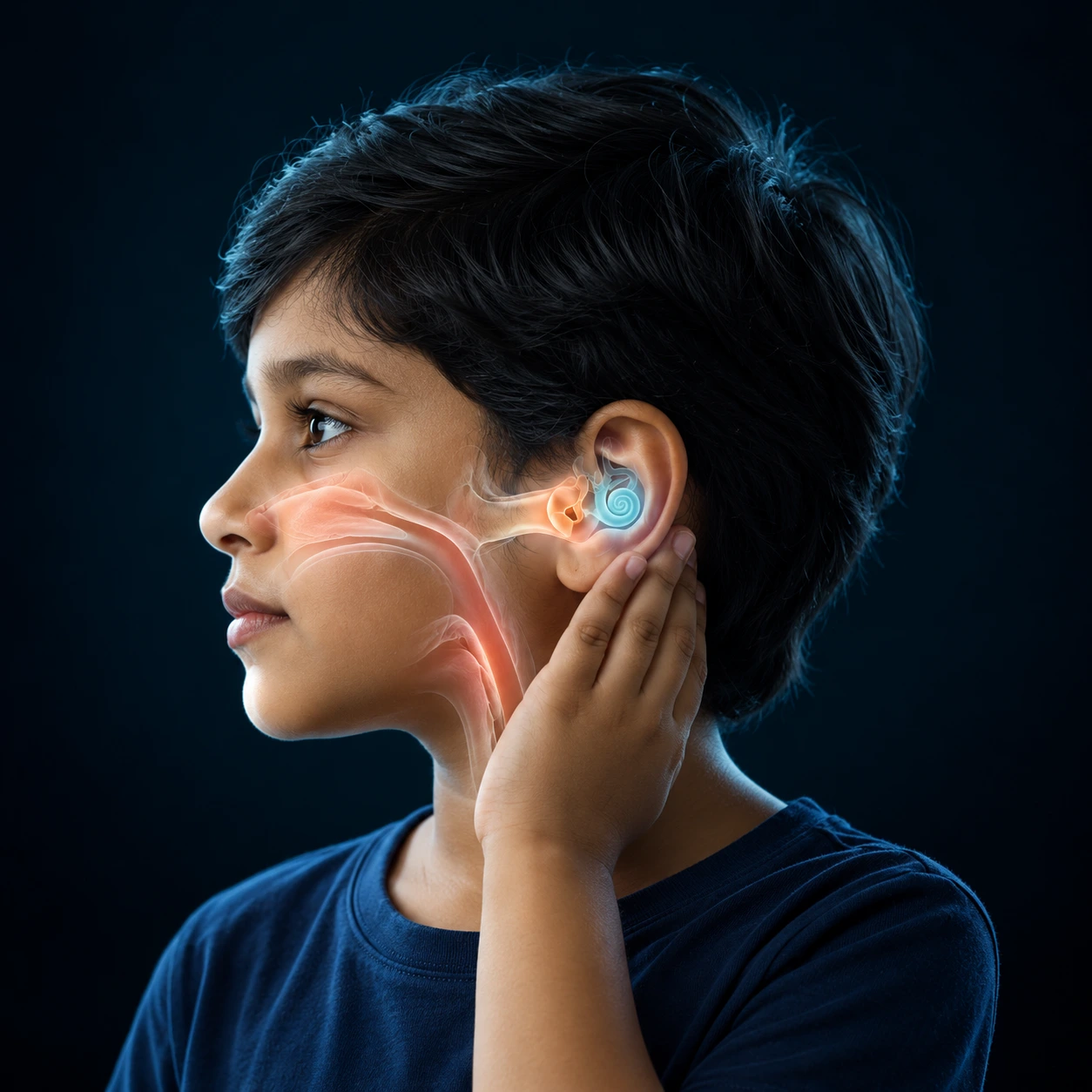
The consultation considers symptoms, their effect on daily life and the findings on examination. Dr. Abhishek Malviya explains the available options so that the next step can be planned for the individual patient.
When Can Tonsil & Adenoid Problems in Children Be Considered?
Enlarged tonsils or adenoids may contribute to blocked breathing, snoring or recurrent symptoms. The assessment considers sleep, infections, hearing and daily activities. Medicines, observation or surgery may be discussed according to the findings.
Concerns that may need assessment include:
- Repeated significant throat infections
- Persistent mouth breathing
- Snoring or breathing pauses during sleep
How Is the Assessment Planned?
Assessment looks at infection history, breathing, sleep, hearing and growth concerns. Further airway or sleep testing may be recommended where the history suggests a need.
Bring earlier prescriptions, hearing tests, scans and relevant medical records. Tell the clinician about current medicines, allergies and previous procedures. Tests are chosen according to the examination rather than being necessary for every patient.
What Does Treatment Involve?
Not every enlarged tonsil or adenoid needs removal. Treatment may include observation or medicines for relevant conditions. Tonsillectomy, adenoidectomy or both may be discussed when the expected benefit justifies surgery.
Follow-up and Ongoing Care
If surgery is advised, parents receive an eating, drinking and pain-relief plan. Fresh bleeding, difficulty breathing or inability to maintain fluids requires prompt medical care.
Consult an ENT Specialist in Indore
For concerns about tonsil & adenoid problems in children, arrange an assessment with Dr. Abhishek Malviya in Indore. The consultation helps clarify the diagnosis and whether observation, medicines, rehabilitation or a procedure is appropriate.
Call +91 90088 97962 or send a WhatsApp message to confirm the consultation location and appointment time.
Book an appointmentFAQ
Can adenoids affect a child’s ears?
Enlarged adenoids can contribute to middle-ear ventilation problems in some children. Ear examination and hearing tests help assess this.
Will every patient need a procedure?
No. Treatment depends on the diagnosis, severity, examination findings and previous care. Nonsurgical options are considered where appropriate.
How is the recovery time decided?
The clinician explains the expected course for the specific treatment. Follow-up findings determine when normal activities can safely resume.
What should I bring to the consultation?
Bring earlier reports, scans, prescriptions and a list of current medicines. For a child, share hearing, sleep and school-related concerns where relevant.
This information is educational. An examination is needed to decide which treatment is appropriate. Benefits, risks and recovery vary between patients.