
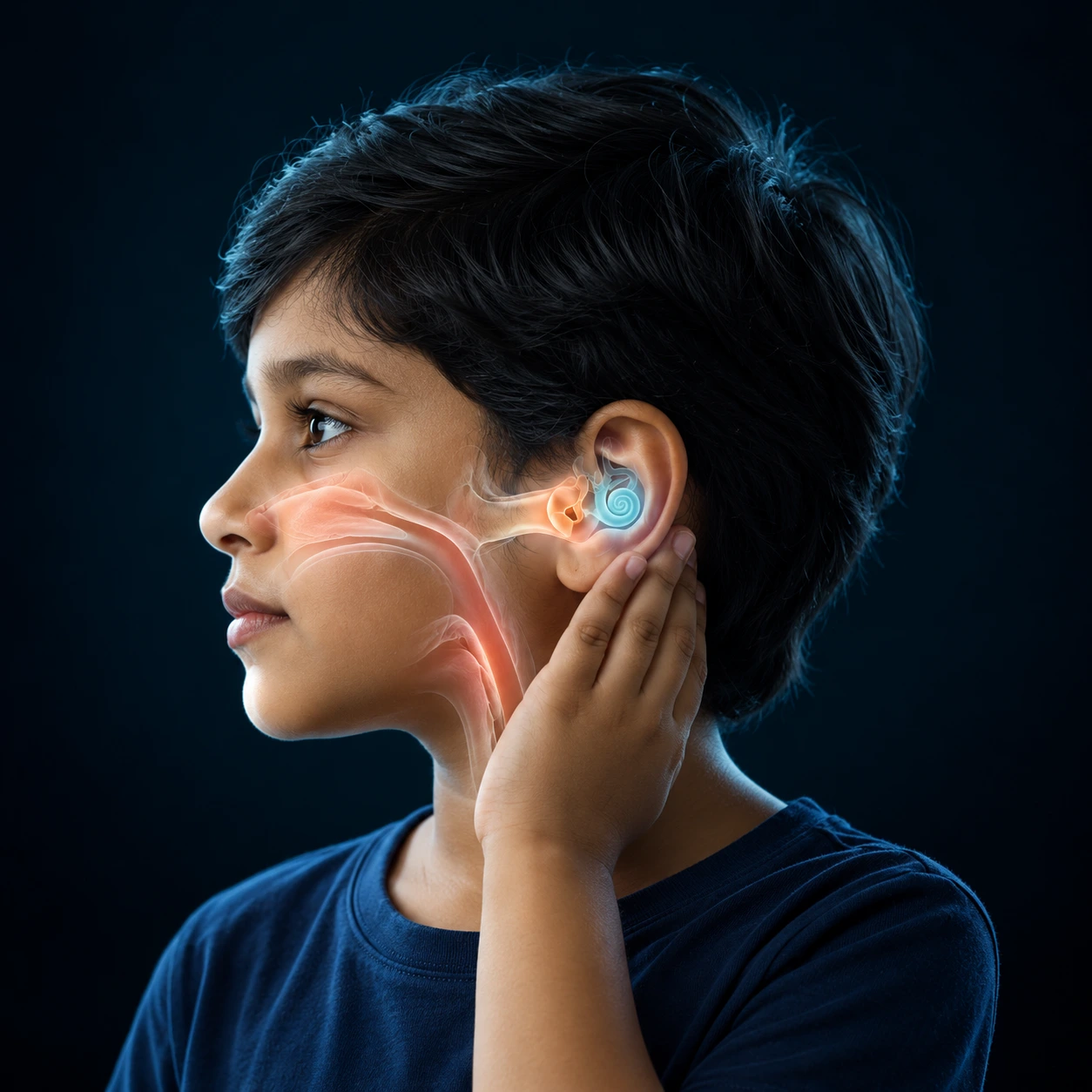
The consultation considers symptoms, their effect on daily life and the findings on examination. Dr. Abhishek Malviya explains the available options so that the next step can be planned for the individual patient.
When Can Ear Infections & Glue Ear in Children Be Considered?
Repeated ear infections and fluid behind the eardrum can affect comfort and hearing. Assessment considers the frequency of infections, hearing, speech and the duration of fluid. Care may involve monitoring, medicines where indicated or a procedure in selected cases.
Concerns that may need assessment include:
- Repeated earache or infections
- Difficulty hearing at school
- Speech or listening concerns
How Is the Assessment Planned?
The eardrum is examined and age-appropriate hearing tests may be arranged. The duration of fluid, effect on daily life and any speech or development concerns help guide management.
Bring earlier prescriptions, hearing tests, scans and relevant medical records. Tell the clinician about current medicines, allergies and previous procedures. Tests are chosen according to the examination rather than being necessary for every patient.
What Does Treatment Involve?
Glue ear is fluid behind the eardrum and is not always an active infection. Care may involve observation, hearing support or selected grommet surgery. Antibiotics are not automatically needed for persistent fluid.
Follow-up and Ongoing Care
Review tracks whether fluid and hearing improve. Seek advice for persistent pain or discharge. Severe illness, swelling behind the ear or a rapidly worsening child needs urgent assessment.
Consult an ENT Specialist in Indore
For concerns about ear infections & glue ear in children, arrange an assessment with Dr. Abhishek Malviya in Indore. The consultation helps clarify the diagnosis and whether observation, medicines, rehabilitation or a procedure is appropriate.
Call +91 90088 97962 or send a WhatsApp message to confirm the consultation location and appointment time.
Book an appointmentFAQ
Can glue ear clear without surgery?
Yes. It often improves with time, but persistent hearing difficulty or a significant impact on daily life may need additional support.
Will every patient need a procedure?
No. Treatment depends on the diagnosis, severity, examination findings and previous care. Nonsurgical options are considered where appropriate.
How is the recovery time decided?
The clinician explains the expected course for the specific treatment. Follow-up findings determine when normal activities can safely resume.
What should I bring to the consultation?
Bring earlier reports, scans, prescriptions and a list of current medicines. For a child, share hearing, sleep and school-related concerns where relevant.
This information is educational. An examination is needed to decide which treatment is appropriate. Benefits, risks and recovery vary between patients.