
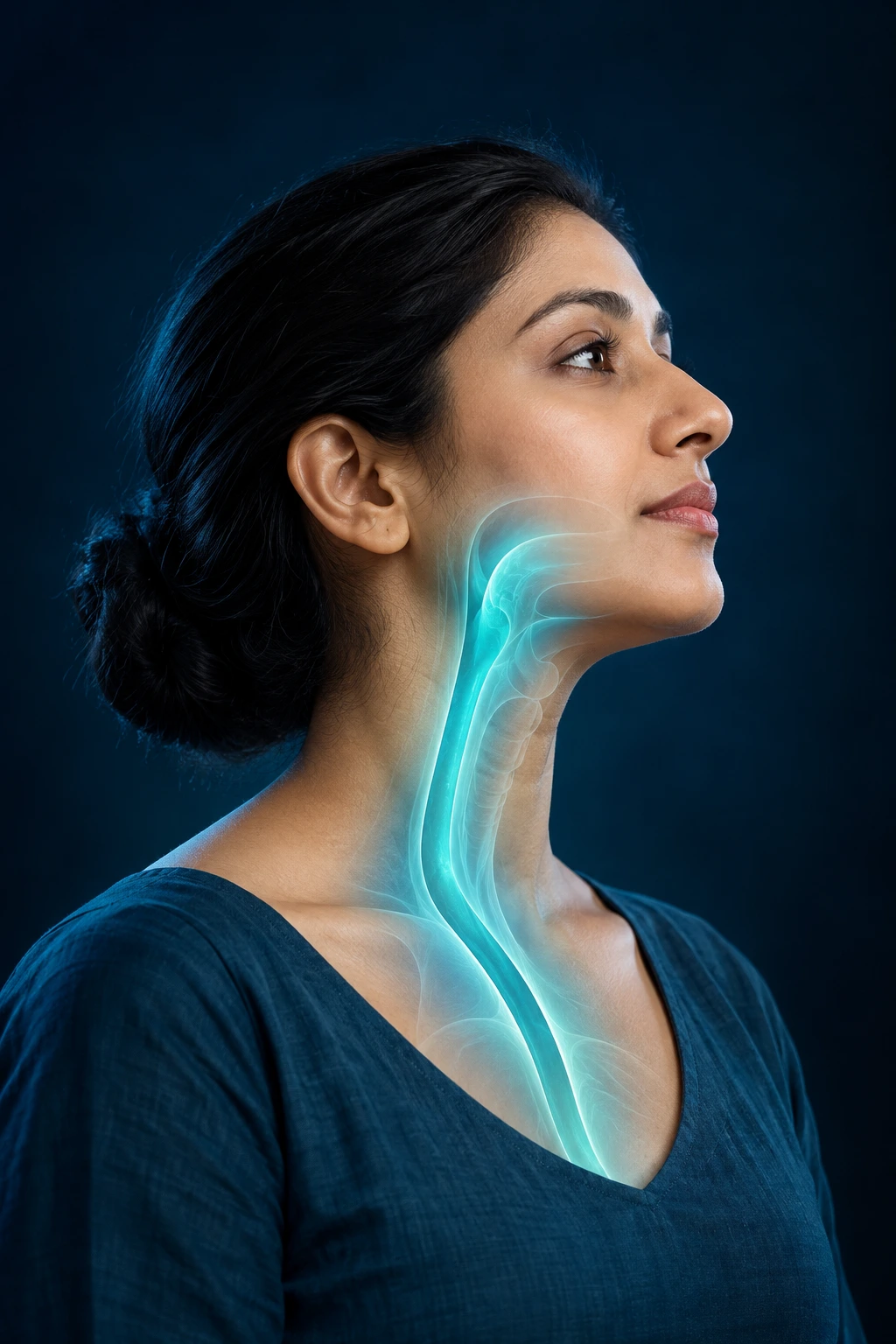
The correct specialist and technique depend on the location and suspected cause. Some cases therefore require coordination between ENT, gastroenterology, anaesthesia, radiology or thoracic surgery.
When May Oesophagoscopy Be Recommended?
Reasons for examination can include:
- Persistent difficulty swallowing, called dysphagia
- Pain while swallowing
- The feeling that food repeatedly sticks in the throat or chest
- Suspected bone, coin, denture or other swallowed object
- Unexplained narrowing or stricture
- Need to inspect or biopsy an abnormal lesion
- Bleeding or injury involving the upper food pipe
- Follow-up of a known oesophageal condition
Complete inability to swallow saliva, drooling, breathing difficulty, severe neck or chest pain, vomiting blood, fever after a suspected sharp-object ingestion or a swallowed button battery is an emergency. Do not induce vomiting or attempt to push the object down with food.
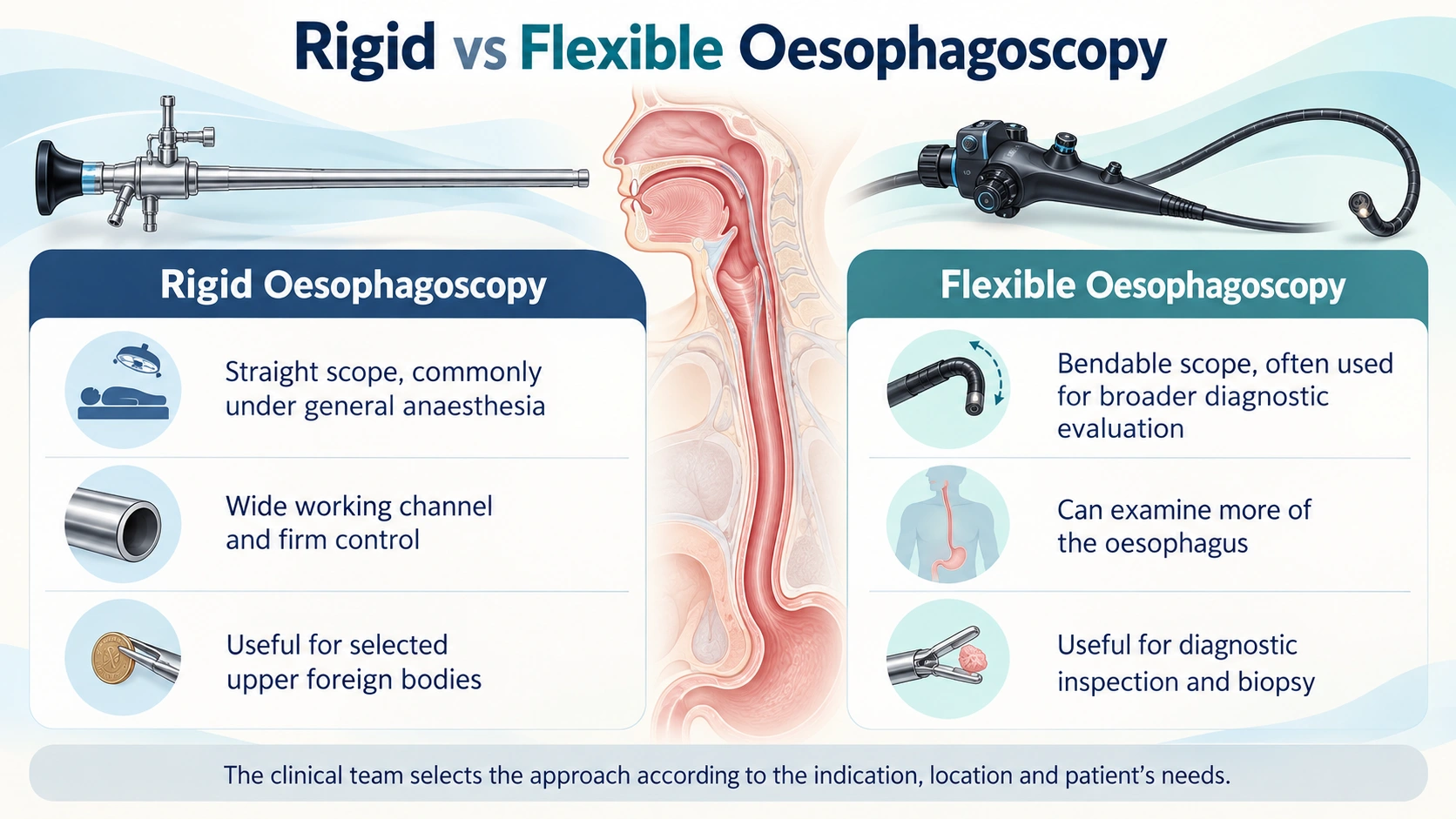
Rigid and Flexible Oesophagoscopy
The team chooses the approach according to object type, location, patient age, symptoms and available expertise.
This ENT procedure should not be confused with diagnostic nasal endoscopy or laryngoscopy, which examine different areas.
Evaluation Before the Procedure
The doctor asks what was swallowed, when symptoms began, whether the object was sharp and whether the patient can swallow liquids or saliva. X-rays can identify coins, batteries and many metallic objects, while CT may be required for perforation, non-visible sharp objects or complications. Not every food bolus or swallowed material appears on a plain X-ray.
For non-emergency dysphagia, examination of the mouth, throat and voice box may be combined with swallow tests or imaging. Sudden obstruction and long-standing progressive swallowing difficulty have different causes and should not be approached as the same problem.
Progressive dysphagia, unexplained weight loss, pain radiating to the ear or persistent voice change requires timely evaluation for a structural lesion. In contrast, intermittent difficulty with solids and liquids may point towards a motility or neurological problem that needs a different investigation pathway.
What Happens During Oesophagoscopy?
Fasting instructions are provided when the situation allows. Under appropriate anaesthesia or sedation, the scope is passed through the mouth into the oesophagus while protecting the teeth and surrounding tissues. The lining is inspected and the required action—observation, biopsy, foreign-body removal or another planned intervention—is performed.
Procedure time varies widely. A smooth coin near the upper oesophagus differs from a sharp bone embedded in swollen tissue or an examination for suspected disease.
Recovery and Aftercare
Patients are monitored until the effects of anaesthesia or sedation have worn off. A mild sore throat can occur. Food and drink are resumed according to the findings and the treating team’s instructions. If a biopsy was taken, the pathology report guides further care.
Severe chest pain, increasing neck swelling, fever, breathlessness, vomiting blood or difficulty swallowing after the procedure needs urgent reassessment because it may indicate bleeding or perforation.
Benefits
- Direct inspection of the oesophageal lining
- Biopsy of a suspicious area when indicated
- Removal of selected foreign bodies
- Diagnosis and treatment during the same anaesthetic in suitable cases
Risks
- Dental, gum or lip injury
- Bleeding or infection
- Anaesthesia-related complications
- Oesophageal perforation, with risk influenced by the object, disease and urgency
Conclusion
Swallowed objects and progressive dysphagia should not be managed with home remedies. Patients seeking oesophagoscopy in Indore can consult Dr. Abhishek Malviya for ENT assessment and hospital-based management where appropriate. Active choking, breathing difficulty or a button-battery ingestion requires immediate emergency attendance.
FAQ
What is oesophagoscopy?
It is examination of the food pipe using a rigid or flexible scope introduced through the mouth.
Why would an ENT surgeon perform oesophagoscopy?
ENT surgeons manage the throat and upper oesophagus, including selected foreign bodies, swallowing problems and suspicious lesions.
Is oesophagoscopy the same as gastroscopy?
They overlap, but equipment, specialist focus and indication can differ. The team selects the appropriate procedure for the suspected problem.
Does a swallowed coin always need removal?
Management depends on location, symptoms, size, age and time since ingestion. Medical imaging and assessment are necessary.
Why is a button battery an emergency?
A lodged battery can rapidly burn surrounding tissue. Immediate emergency evaluation is required even if the child initially appears well.
Is general anaesthesia needed?
Rigid oesophagoscopy commonly requires general anaesthesia. Flexible procedures may use sedation, depending on the indication.
Can a biopsy be taken?
Yes. Suspicious tissue can be sampled during oesophagoscopy when clinically indicated.
What should I avoid after the procedure?
Follow instructions about food, driving and activity. Restrictions depend on anaesthesia and whether intervention or biopsy was performed.
What symptoms after oesophagoscopy are urgent?
Severe chest pain, fever, breathing difficulty, neck swelling, vomiting blood or worsening swallowing requires urgent care.
Where is oesophagoscopy available in Indore?
Dr. Abhishek Malviya evaluates suitable ENT and upper-oesophageal indications for hospital-based oesophagoscopy in Indore.
This information is educational. An examination is needed to decide which treatment is appropriate. Benefits, risks and recovery vary between patients.